







Public Issue

Public Issue

A public issue refers to the offering of securities by a company to the public to raise capital. In India, public issues are governed by a comprehensive regulatory framework that ensures transparency, fairness, and protection of investors. There are different types of public issues, including Initial Public Offerings (IPOs) for unlisted companies, public issues for…


Read More
GST Registration

GST Registration: Process, Eligibility, & Required Documents for Online Application

GST registration is a procedure where a taxpayer registers under the Goods and Services Tax (GST) regime. Post-registration, businesses receive a unique 15-digit Goods and Services Tax Identification Number (GSTIN) assigned by the central government. This identification number is essential for all tax-related transactions. Additionally, you can verify the GST number to access complete business…

Read More
Partnership Firm Registration

Registration Process for Partnership Firms Under the Indian Partnership Act

A partnership firm stands as a significant business structure, widely embraced within India. This form of organization necessitates a minimum of two individuals to initiate. Essentially, a partnership firm materializes when multiple parties unite to establish a business, subsequently dividing its profits according to a prearranged ratio. The spectrum of partnership business encompasses various trades,…

Read More
Debt Restructuring

Debt Restructuring: A Comprehensive Guide to Financial Recovery

Debt restructuring is a financial strategy used by private or public companies, or even sovereign entities, that are experiencing cash flow problems and financial distress. This process involves renegotiating and modifying the terms of existing debt agreements to reduce the financial burden and restore liquidity, allowing the entity to continue its operations. When an entity…

Read More
Distressed Assets

Introduction to Distressed Assets

Distressed assets refer to financial instruments or properties that are under significant financial or operational distress, usually due to their inability to meet financial obligations. These assets typically belong to companies facing bankruptcy, default, or severe financial hardship. The primary characteristic of distressed assets is that they are sold at a significantly lower value than…

Read More
One Time Settlement (OTS)

Resolving Non-Performing Loans: One Time Settlement (OTS)

One Time Settlement (OTS) is a legal contract between a financial institution (bank) and its borrower to resolve a Non-Performing Loan (NPL) at a reduced amount. This arrangement benefits both parties: the bank reduces its bad loans, and the borrower eliminates associated legal and financial issues. After successfully completing an OTS, the bank improves its…

Read More
SARFAESI Act

SARFAESI Act: A Crucial Legislation for Financial Recovery

The Securitisation and Reconstruction of Financial Assets and Enforcement of Security Interest Act (SARFAESI Act), enacted by the Indian Parliament in 2002, is a landmark law. It empowers banks and financial institutions to reclaim non-performing assets (NPAs) efficiently without court or tribunal intervention. This act was introduced to address the burgeoning NPAs that were crippling…

Read More
Non Banking Financial Companies (NBFC)

Non Banking Financial Companies (NBFC)

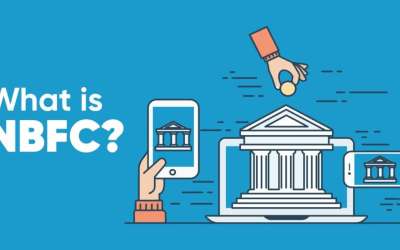
Non Banking Financial Companies (NBFC): A Detailed Overview A Non-Banking Financial Company (NBFC) is a financial institution that provides various banking services without holding a full banking licence. Unlike traditional banks, NBFCs are restricted from accepting demand deposits, such as savings accounts and checks, from the public. These entities, also known as Non-Banking Financial Institutions…

Read More
Beginners Guide to Loan Against Property (LAP)

Beginners Guide to Loan Against Property (LAP)

When considering financial transactions involving pledging property as collateral to secure a loan, it’s crucial to grasp the concept of ‘Loan Against Property’ (LAP). In this arrangement, the borrower offers their property as security for the loan, while still maintaining ownership and possession throughout the repayment period. The Concept of Loan Against Property A Loan…

Read More
What is Working Capital

Working Capital

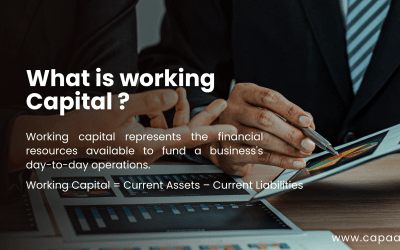
What Is Working Capital? Working capital refers to the financial resources available to sustain a business’s ongoing operations. It measures the funds readily accessible for immediate needs such as payroll, planned and unplanned expenses, and purchases of essential materials. A robust working capital level reflects a well-managed, efficient business capable of meeting daily operational demands….

Read More